Inside USD 379 classrooms, something powerful is happening—one sound, one word, and one student at a time.
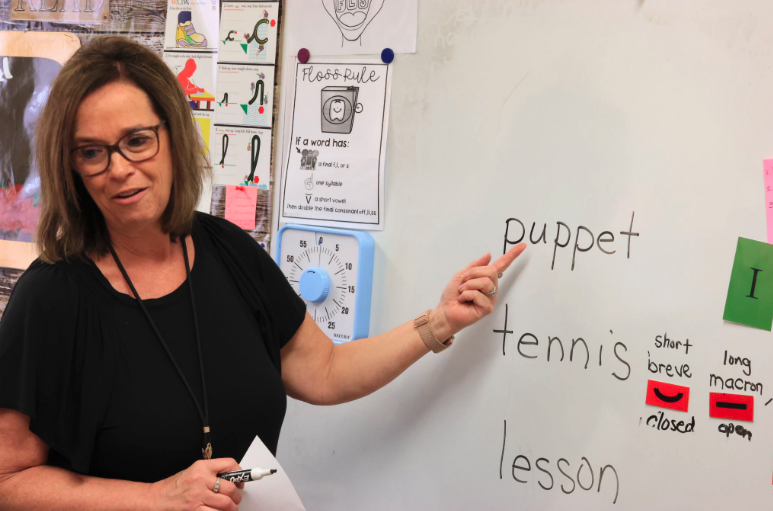
Although reading teachers in every Kansas school district are required to complete the Lexia LETRS program, USD 379 has taken it a step further by training 7 teachers in the Alphabetic Phonics reading program through the Phillips Fundamental Learning Center in Wichita.
Alphabetic Phonics is a structured, multisensory reading intervention that is designed to help struggling readers (including students with dyslexia) build strong foundational literacy skills. Rooted in the science of reading, the program’s structured, step-by-step approach ensures that no gaps are left unaddressed. Concepts are introduced gradually and reinforced daily—something teachers say is essential for students with dyslexia or other learning differences.
This means that Clay County Schools are offering something rare in rural education: a highly specialized literacy intervention typically found only in private clinics or large metro areas.
“We are one of the few districts in the entire state that have this many people trained as dyslexia specialists,” said LES interventionist Dr. Wendi Fox, who was one of the first to be trained. “You can try to get into the neurology center in Manhattan and pay $70 an hour for sessions, or you can come to us and get it for free in our daily curriculum. This kind of training and support isn’t common—especially in districts our size.”
The program started small four years ago, but now that it is fully implemented, the results are staggering. For example, there are 27 3rd graders at Lincoln and Wakefield who started Alphabetic Phonics in 1st grade. Compared to the national average, their reading percentile rose from 13.0% in the fall of 2023 to 52.5% in this spring’s AimWeb+ testing. This means they were only ahead of 13% of first-grade students, and now they are above the 50th percentile just 2+ years later.
“We’re blown away by the progress,” said Shawn Liby, who teaches the program to 2nd and 3rd graders at Lincoln. “When students now come into third grade after being in the program, the classroom teachers notice immediately. The growth is real.”
But the impact goes beyond data. Just ask Chandra and Daniel Schwab, who ended up enrolling their children in USD 379 because of the program.
“I’m dyslexic, so I knew what Laney (now an 8th grader at CCCMS) was going through,” Chandra said. “She was fine intelligence-wise, but reading was just hard.”
After Laney was diagnosed with dyslexia and struggled for years in another district, Schwab reached out to GES interventionist Kris Galindo. Once the 1:1 Alphabetic Phonics lessons began, the results came.
“She just really blossomed, and I knew right then and there that both the curriculum and Mrs. Galindo were amazing.”
It was then that the Schwab family decided to make an out-of-district request to attend USD 379. It was a move they haven’t regretted because of the confidence both of their kids have gained. The teachers agree.
“In the regular classroom, some of these kids start out feeling like they’re always behind,” said Angie Adams, an intervention teacher at Wakefield Elementary. “Here, they feel successful. It’s the trifecta of learning. If students see it, hear it, and do it, their brains build stronger connections. That’s when it starts to click.”
And as more students continue to make gains, the district’s investment in literacy is paying off in other areas, such as state assessment scores and ultimately, post-graduation success.
“This program can change lives,” Fox said. “If we want to change the projection of these children’s lives, this is the way to do it.”
To learn more about the Alphabetic Phonics reading intervention program at USD 379, watch “Hope For Kansas: Clay Center Schools”, a video created by the Phillips Fundamental Learning Center.